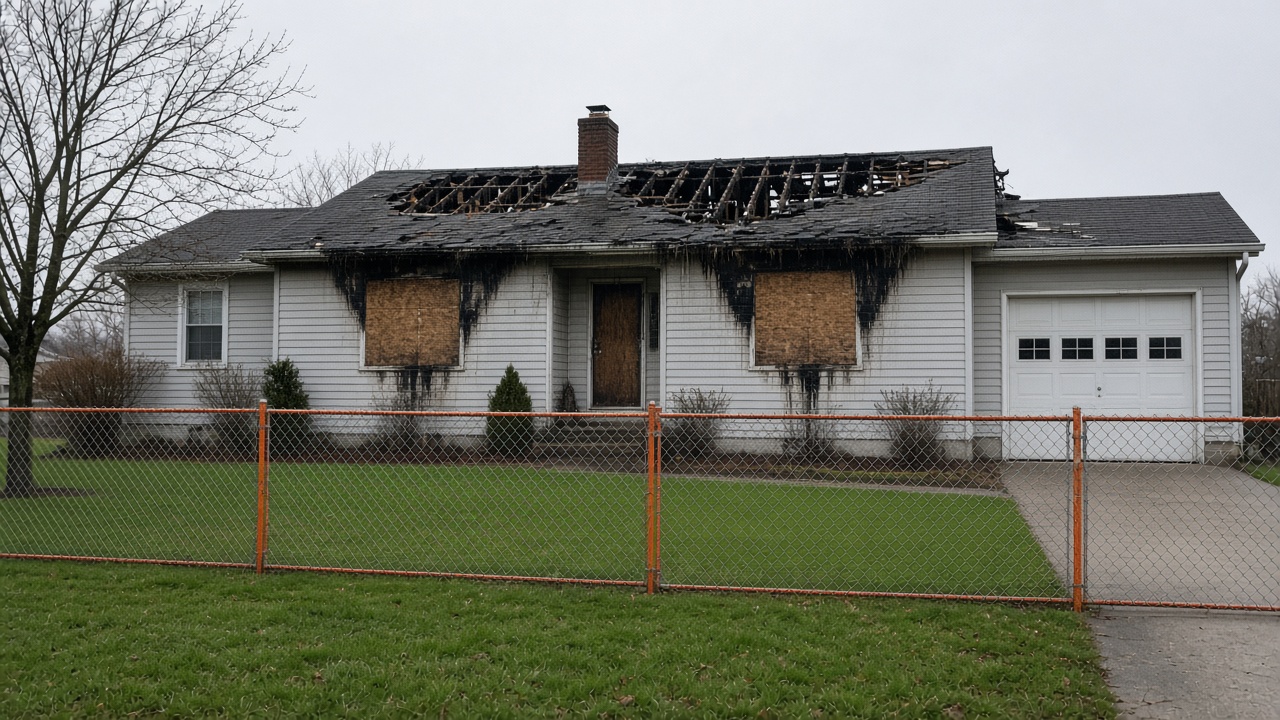
Two days before Christmas 2021, a cracked chimney started a fire that destroyed a substantial part of a newly purchased home in Muncie, Indiana. Terry and Theresa Predmore called their insurer the same day. The insurer paid. On the 2021 return, they claimed a $315,000 casualty loss.
That deduction wiped out their income. The return showed $234,689 of income and $336,240 of itemized deductions. Taxable income was zero. The refund was $34,280. The IRS paid it. In 2025 the IRS disallowed the deductions. It determined a $38,344 deficiency and added a 20 percent accuracy-related penalty of $7,669. The Predmores no longer argue the deduction was proper. They argued the penalty should not apply. The court disagreed.
They put the loss on Form 4684, Section B, the part for business and income-producing property. They listed the primary house, a $350,000 basis, and a $35,000 value after the fire. Mr. Predmore prepared the return himself. He did not read the Form 4684 instructions. He did not ask a tax professional. He did not remember ever claiming a casualty loss like this.
The business label did not hold. They said they planned to use three extra bedrooms to breed dogs, and they expected $10,000 to $15,000 a year. At the time of the return they had not started that activity. They had one golden retriever. Initial plans are not a trade or business. Even if they had started, they could not have treated the whole house as business property.
For 2021, a personal casualty loss was deductible only if it came from a federally declared disaster. Indiana had COVID-19 declarations. This fire was not one of them.
There is a second rule, and it applies even when a deduction would otherwise exist. If you have a claim for reimbursement and a reasonable prospect of recovery, you have not sustained the loss yet. You wait until you know, with reasonable certainty, what you will not be paid back.
By the time they filed on April 16, 2022, that prospect was already more than reasonable. In January and February the insurer had paid $65,550 for personal property, $2,745 to a dry cleaner, and $6,662 for loss of use. On March 7 they signed a repair agreement for $366,184, of which insurance was to pay $365,184. On March 20 the insurer said it had already paid $75,357 and that the dwelling estimate was done. Around April 29, $258,332 landed in their account. That was the actual cash value of the house, less a $1,000 deductible. Three days after they filed, the insurer confirmed $333,689 paid to date. By August 30 the total was $355,141. Of that, $258,732 was the dwelling, $68,295 was personal property, and $28,115 was loss of use. The dwelling coverage later paid $437,000, the policy cap. Extra repair costs above that cap are theirs.
Mr. Predmore said the contents and loss-of-use checks felt separate from the bigger dwelling payment, so the claim still seemed uncertain. The court did not doubt that he believed it. It did not find the belief reasonable. The instructions already said how this works. They did not read them.
A fire can still land in more than one place. Sometimes there is no income and no deduction. Sometimes there is a real casualty loss, if the rules for that property and that year allow it and insurance will not cover it. Sometimes the check is more than your basis, and the extra is gain. Sometimes you can postpone that gain by putting the proceeds into qualifying replacement property on time. Personal-use property, a rental, and a business property are not the same analysis.
This is the point the court cared about. A large number that zeroes out the return is not a guess. Keep the settlement, the adjuster's numbers, photos, basis records, and repair invoices. If insurance is already paying, do not deduct the same loss on the way to a refund. Read the form. If the loss is bigger than you have claimed before, have someone look at it before the return goes in.
Predmore v. Commissioner, Tax Court docket 9391-25S. Judge Emin Toro gave oral findings of fact and opinion on September 22, 2026. The opinion was served on September 25, 2026. The court heard the case under section 7463. The opinion says it is not precedent. It decides this case. It does not control the next one.
Shawn Lavi, CPA